Anomaly and defect detection
Product check at the prep station
The inspection point
Products such as a pizza or a pide are finished at the cut table and go straight into their box. Once the box is closed, nobody sees the product again until the customer opens it, and that is where a wrong type, a missing topping or a topping piled on one side is found. The same product made in two branches by two different people can look quite different, and the standard holds only as long as every one of them is checked.
How it runs on the line
The unit is mounted over the cut table and sees the open product in a single frame before it is boxed. Anomaly and defect detection is trained on about 20 correctly made products per menu item, so a missing topping, an uneven spread and a product other than the one ordered all come out as deviation. Code reading takes the menu item from the code on the order ticket; an order note such as "no onion" calls up the matching reference, and the product is compared with its own reference. The result is shown on the screen at the table before the box closes.
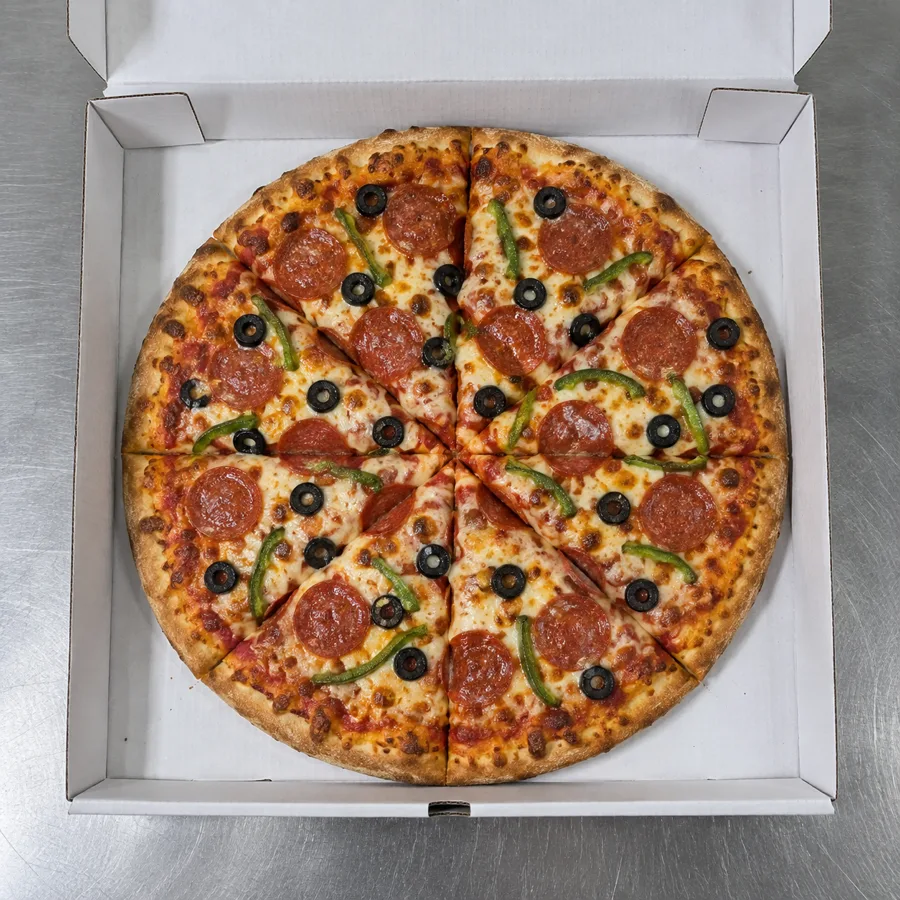 OK
OKCorrect pizza, toppings spread evenly 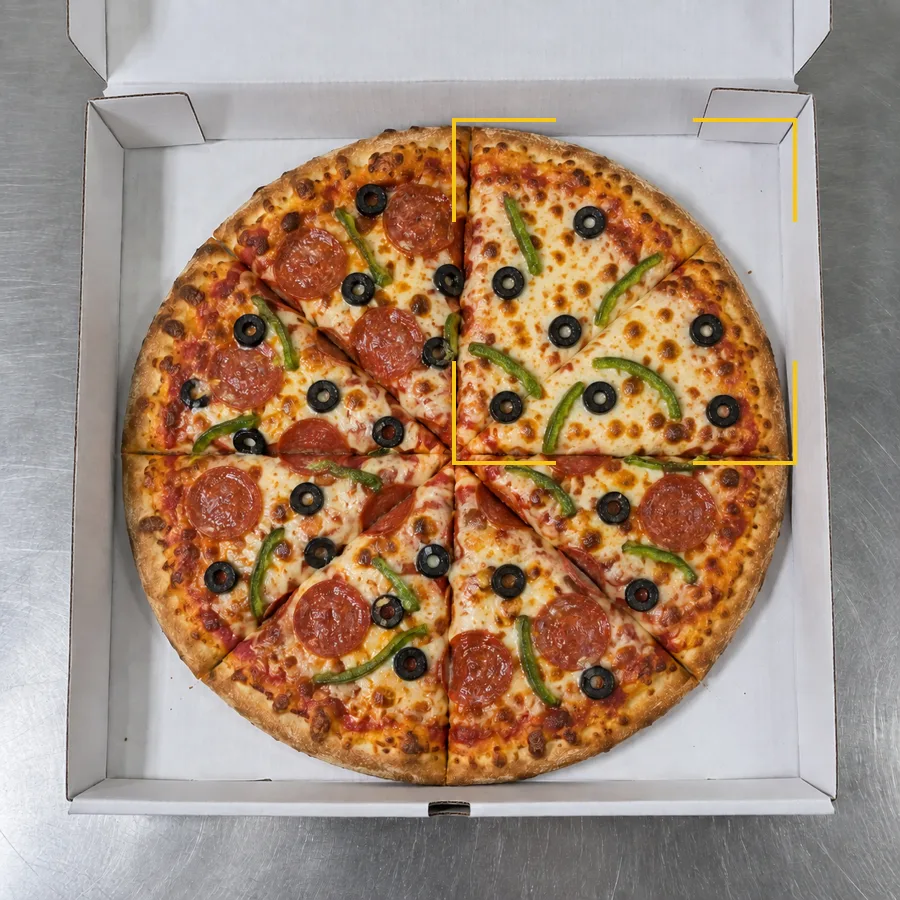 NOK
NOKPepperoni missing from one quarter 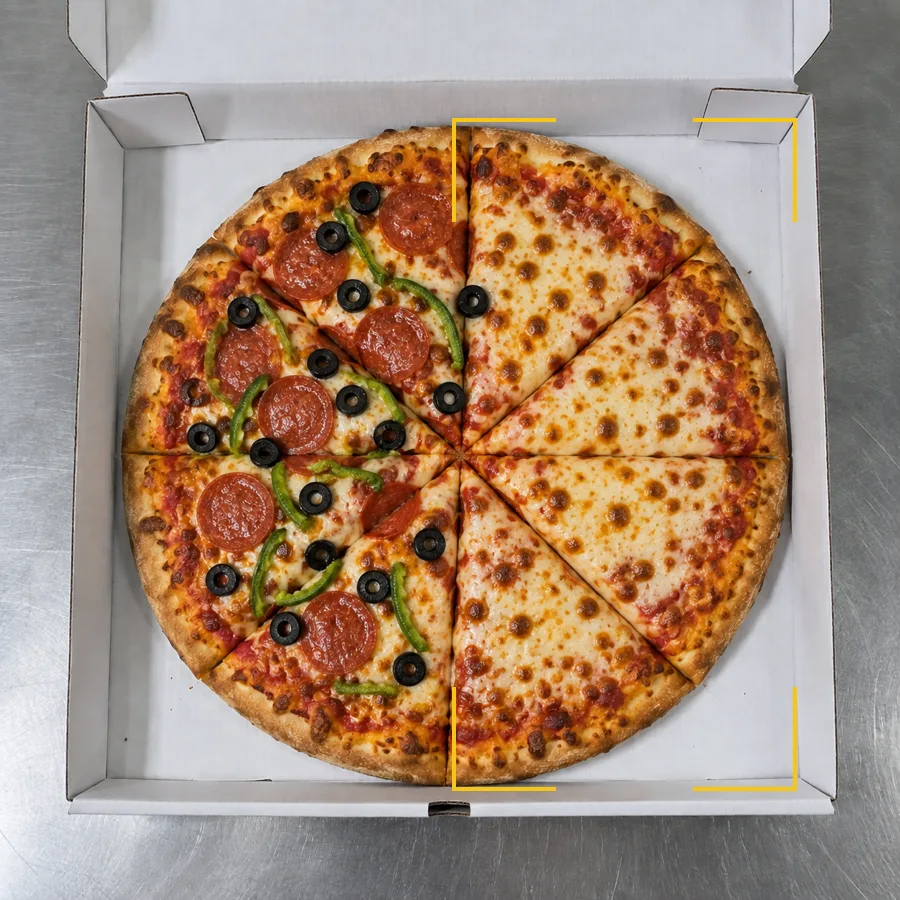 NOK
NOKToppings on one half only
Application references
- Mode used
- Anomaly and defect detection
- Training set
- About 20 correct products per menu item
- Scope
- Type, toppings and their spread
- Position
- Over the cut table, before boxing
Let us test your part.
We bring the unit to your line and test your own parts at your own line speed. We build the quote around what the test shows.