21 September 2026 · 6 min read · Mert Aytunur · Mechanical Engineer, University of Illinois Chicago
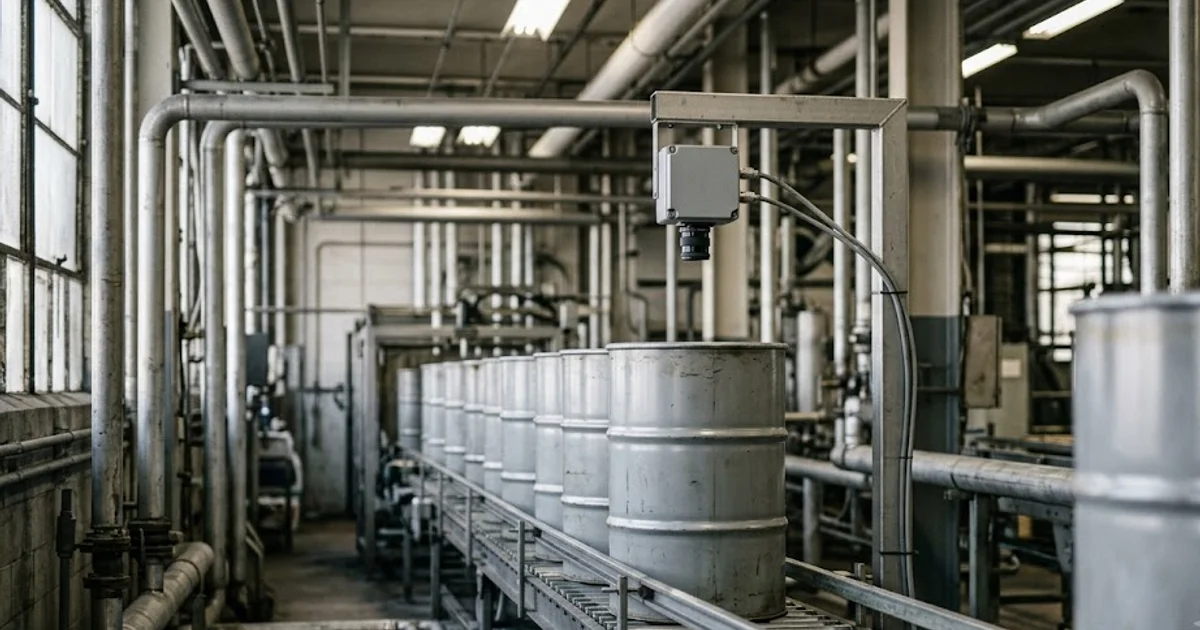
Chemical and petrochemical lines add a constraint no amount of AI accuracy overrides: the atmosphere can be flammable, so any equipment in the cell must not become an ignition source. A standard industrial camera, however good its inspection, is not built for that, and specifying one into a hazardous area is a safety failure, not just a durability one.
So this post leads with what to verify, and is deliberately careful about what it claims.
What does a hazardous atmosphere require of an enclosure?
The area classification of the cell, its zone and the gas or dust group, dictates the certification the enclosure must hold. The AV-X100 is the variant positioned for chemical and petrochemical environments, with an IP66 rating: dust-tight and protected against heavy water jets. IP66 is an ingress rating under IEC 60529, and it is necessary but not the whole story. The hazardous-area certification is what governs, and it is specific to your zone.
Here is the honest part. Adente Vision declares CE, IP54 and IEC, and the AV-X100 carries IP66. A specific ATEX or IECEx certificate number is not something to take from a blog post. Ask for the exact certificate and the datasheet, and confirm it covers your area classification, before you specify the unit.
What to verify before you specify it
| Question to ask | What to check | Why it matters |
|---|---|---|
| What area classification is this cell? | The zone and gas/dust group | The certification the enclosure must hold |
| What certificate does the unit hold? | The specific ATEX/IECEx document | Ask for the certificate and datasheet, not a claim |
| What IP rating does the enclosure carry? | IP66 on the AV-X100 | Dust-tight and heavy-jet protection |
| Where does the image data go? | Processed on the unit, nothing uploaded | Imagery never leaves a sensitive site |
| Which environment variant? | AV-X100 for chemical and petrochemical | Same optics and AI, hazardous-rated shell |
The pattern of this table is the pattern for buying any inspection unit for a hazardous line: put the certification questions before the feature questions, and take the certificate, not the adjective. For a fuller buyer's list, see the questions to ask any vision vendor.
What can it inspect, and where does the data go?
On a chemical or petrochemical line the unit runs container, label and fill checks plus anomaly detection for rare faults, trained on good parts only from about 20 samples, ready in under 48 hours. Inference runs on a fanless Jetson-class board inside the enclosure, so the pass/fail is emitted locally and no imagery leaves the site, which matters where the process is sensitive.
Adente Vision is an edge-AI visual inspection unit built by ADENTE Advanced Engineering Technologies, part of the Aden Group, sold through automation system integrators. The unit installs in about 30 minutes, one person, since it is under 9 kg, and connects over the five industrial protocols or its 24V I/O. This post is a spoke of the pillar guide on AI visual inspection; see the system for the full hardware picture, and how a 30-minute field install works.