Part identification
Colour and shade discrimination
The inspection point
Colour is not noticed until two parts are seen side by side; a part that looks right on its own creates a shade difference when it meets its neighbour at assembly. The difference usually comes from the material batch or the pigment mix and spreads across a whole batch.
How it runs on the line
The lighting is held at a constant colour temperature; on this job the stability of the light matters as much as the measurement. The model learns the accepted shade range, so a part outside it and blotchy colour within one part come out as deviation. The result reaches the line.
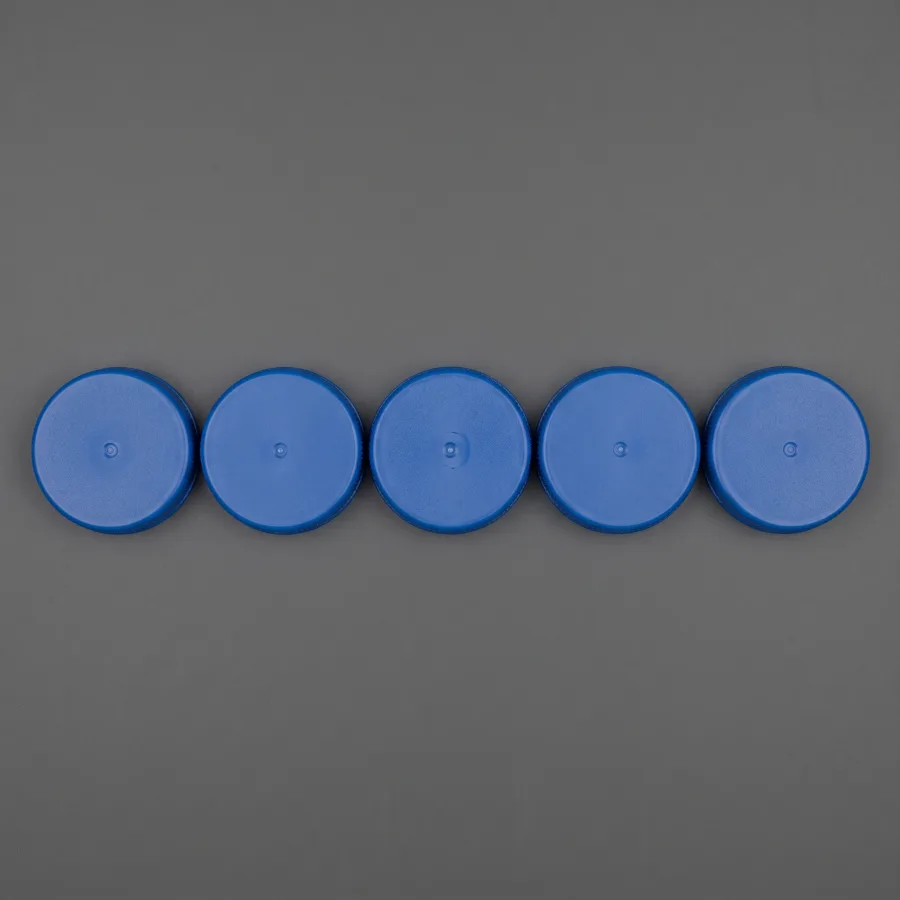 OK
OKFive caps of the same shade 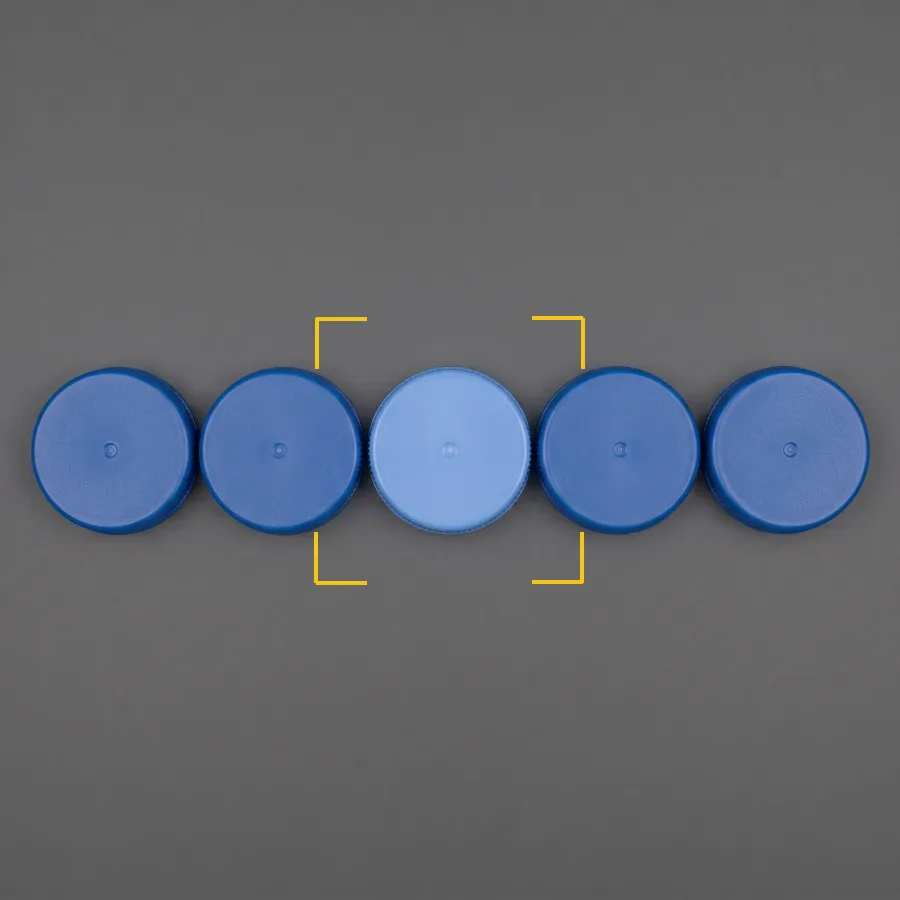 NOK
NOKOne cap with a different shade
Application references
- Mode used
- Part identification
- Training set
- About 20 accepted parts
- What decides it
- Constant colour temperature
- Decision time
- ~90 ms per part
Let us test your part.
We bring the unit to your line and test your own parts at your own line speed. We build the quote around what the test shows.