Part identification
Classification and sorting
The inspection point
Mixed feeding is where hand sorting costs the most: the work is repetitive, it is fast, and the error rate climbs by the end of a shift. Classification has to happen at line speed on every part, and the ejection mechanism has to be triggered in time.
How it runs on the line
The model is trained per class with about 20 samples each. The unit classifies the passing part and sends the class code to the PLC, and the actuator routes the part into its lane. Adding a class means collecting samples and updating the model.
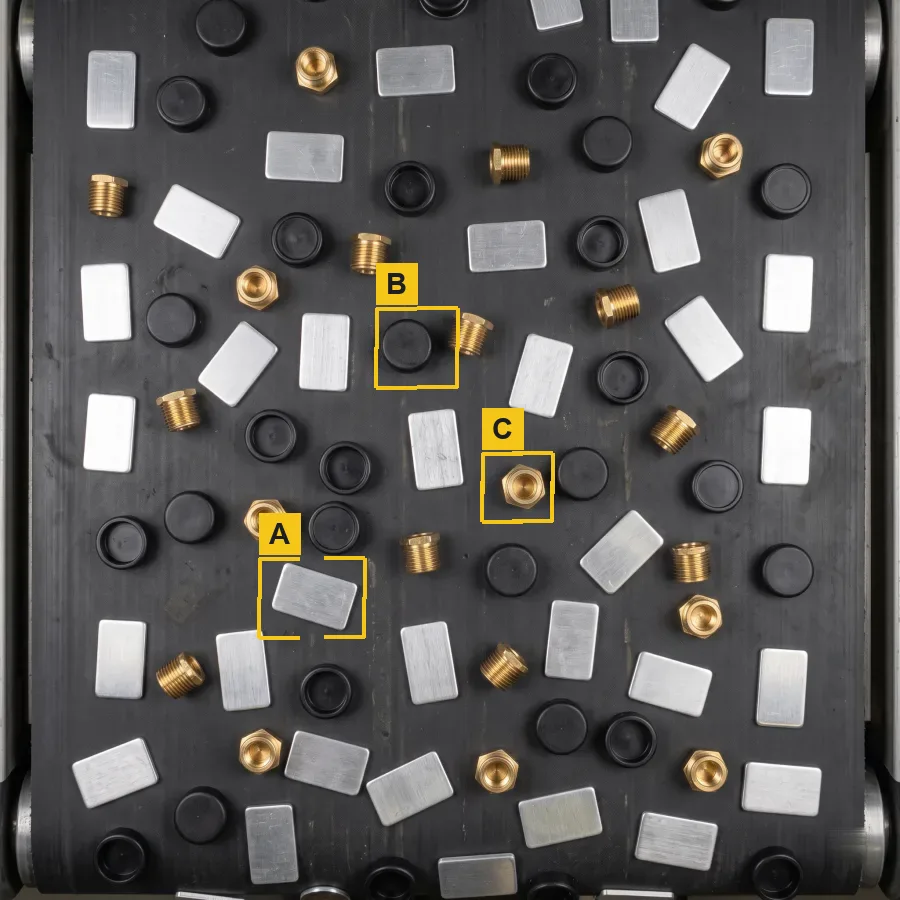
Mixed parts on the belt, separated into their classes
Application references
- Mode used
- Part identification
- Training set
- About 20 parts per class
- Output
- Class code
- Line signalling
- Triggers the sorting actuator
Let us test your part.
We bring the unit to your line and test your own parts at your own line speed. We build the quote around what the test shows.